Designing the platform for category leadership.

CINC's customer promise is simple: make community association work less tedious and more meaningful. Delivering on that promise across an expanding platform required more than a redesign. It required a system for the way the product explains itself.

  • Client CINC Systems
  • Duration 16 weeks
  • Credits Duri Chitayat, Ashley Berenson, AI leads at CINC
The client

Serving every role in community management.

CINC Systems is a community association management platform serving managers, accounting teams, board members, customer service teams, administrators, and residents across the US. The product spans accounting, resident experiences, communications, tasks, payments, management workflows, and reporting.

The mission is clear: to become the undisputed category leader in the US. AI woven into customer workflows through Cephai. A pace of delivery customers would feel.

That trajectory needs a product that teaches itself. At today's scale, customer service onboards new users one at a time. At the scale CINC is going for, manual training does not scale. The product itself has to take that load.

CINC design system surface
The bottleneck

Every new customer needed manual training to use the product.

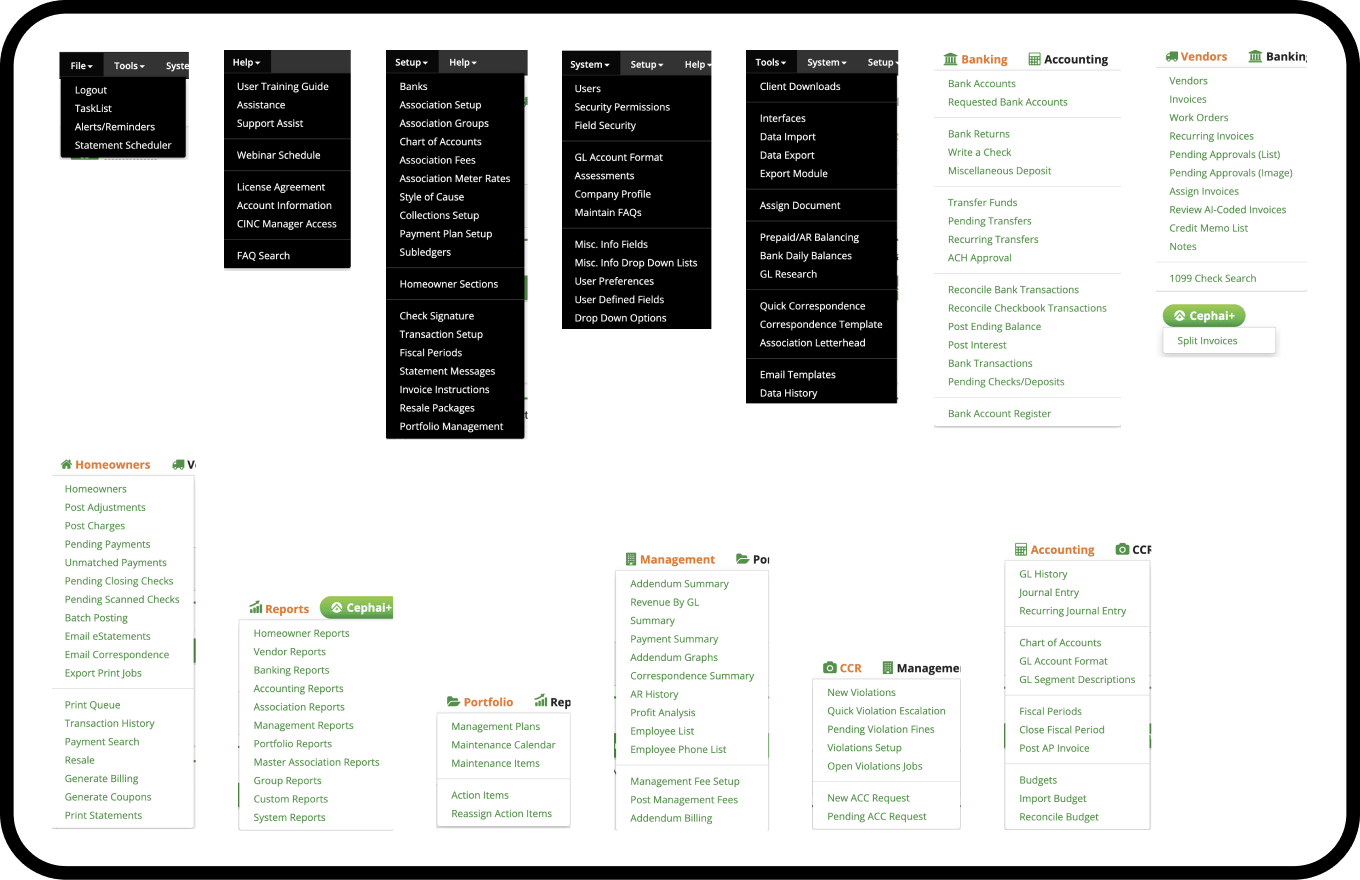
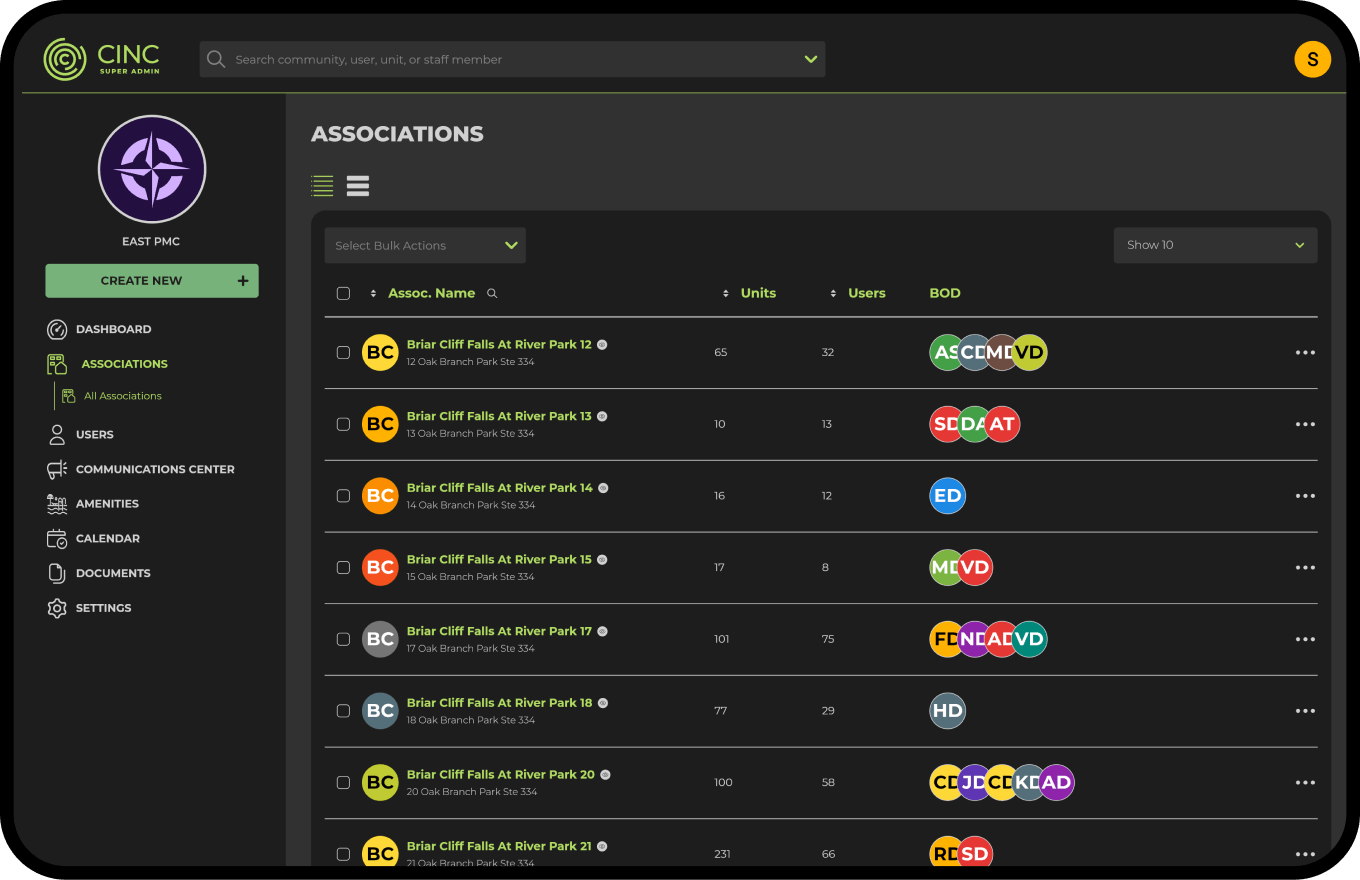
The portfolio had expanded into seven separate products: different logins, different interfaces, different logic. CINC Accounting had been untouchable for years, so every new surface launched alongside it as another product to learn.

Across all of it, users faced 200+ choices before they could start working, jumping between products to follow their workflows. User onboarding relied on phone calls, webinars, and manual training.

The training cost scaled with the customer base. To grow into the category leader, the product had to absorb the training cost itself and become one intuitive product.

The work

What we did.

Mellow Studio worked alongside CINC's design, product, and engineering leadership to build a shared design language and the foundations of an information architecture the whole platform could grow into.

The work was scoped against a practical use case so the system would prove itself in production, not in a style guide.

01 · Global navigation

A single navigation layer across every CINC product.

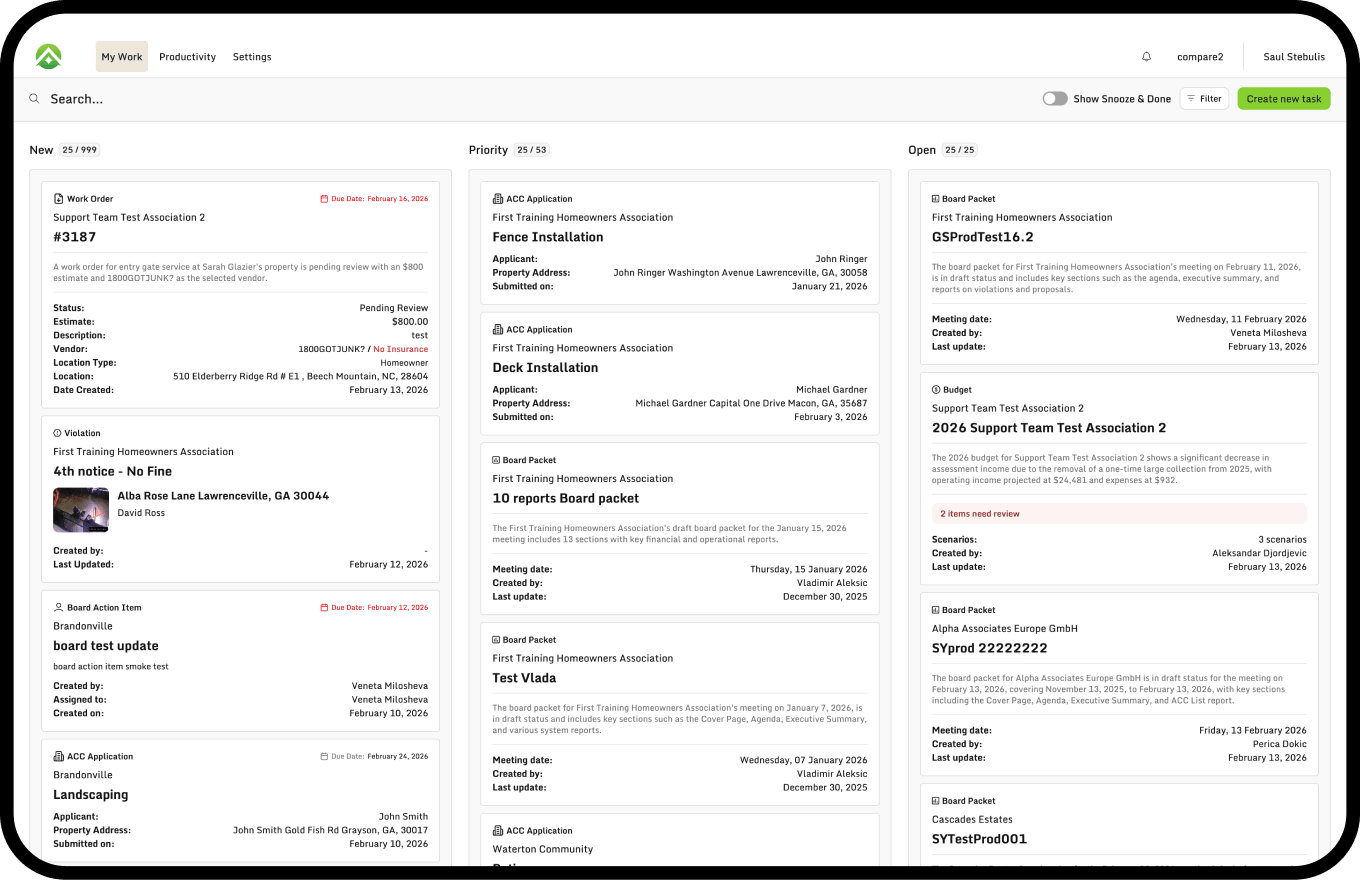
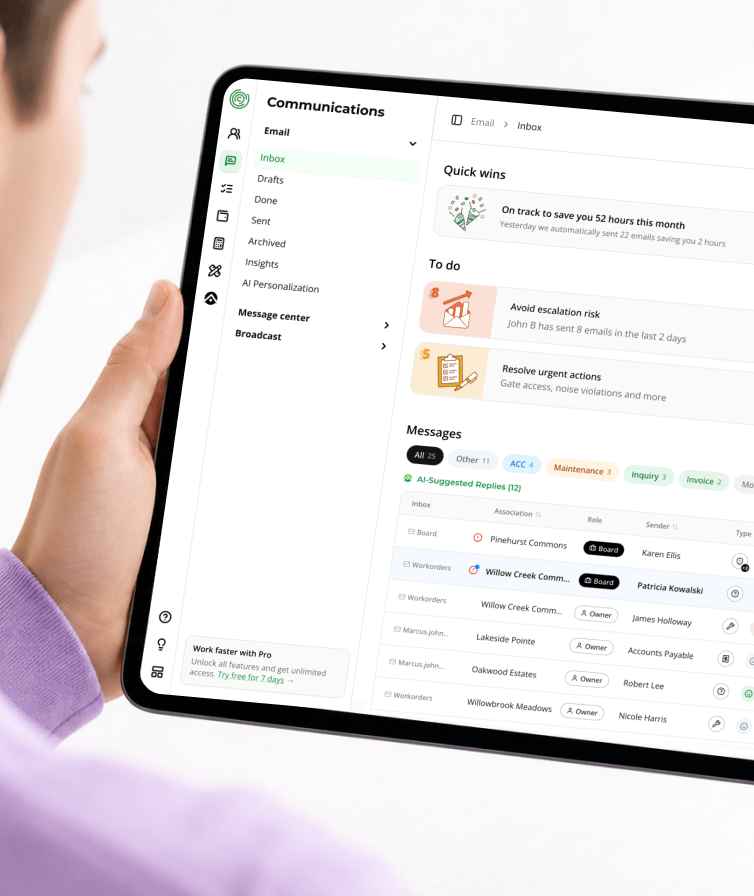
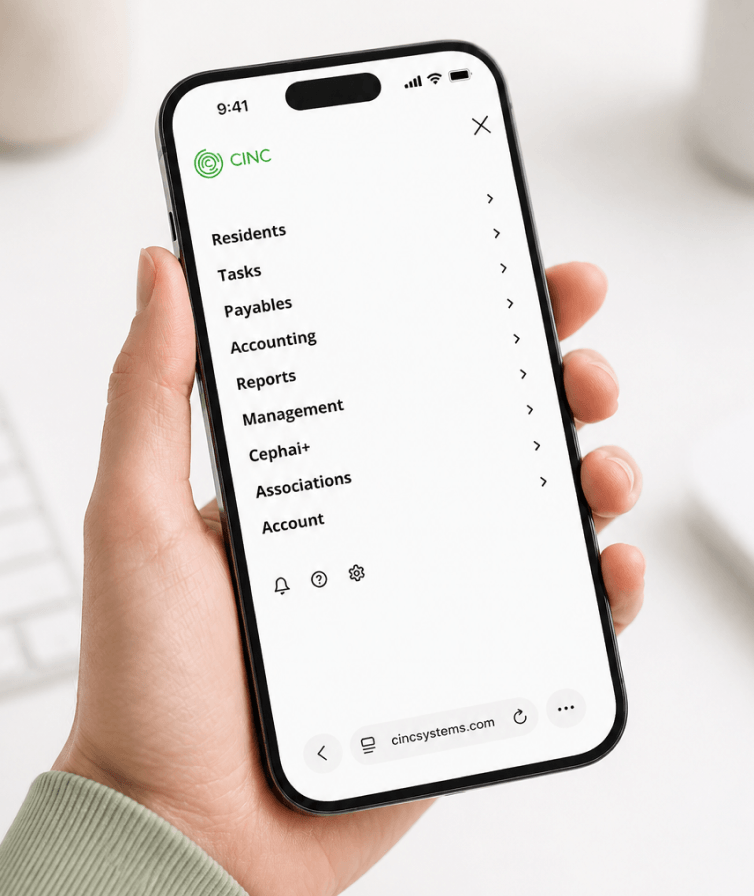
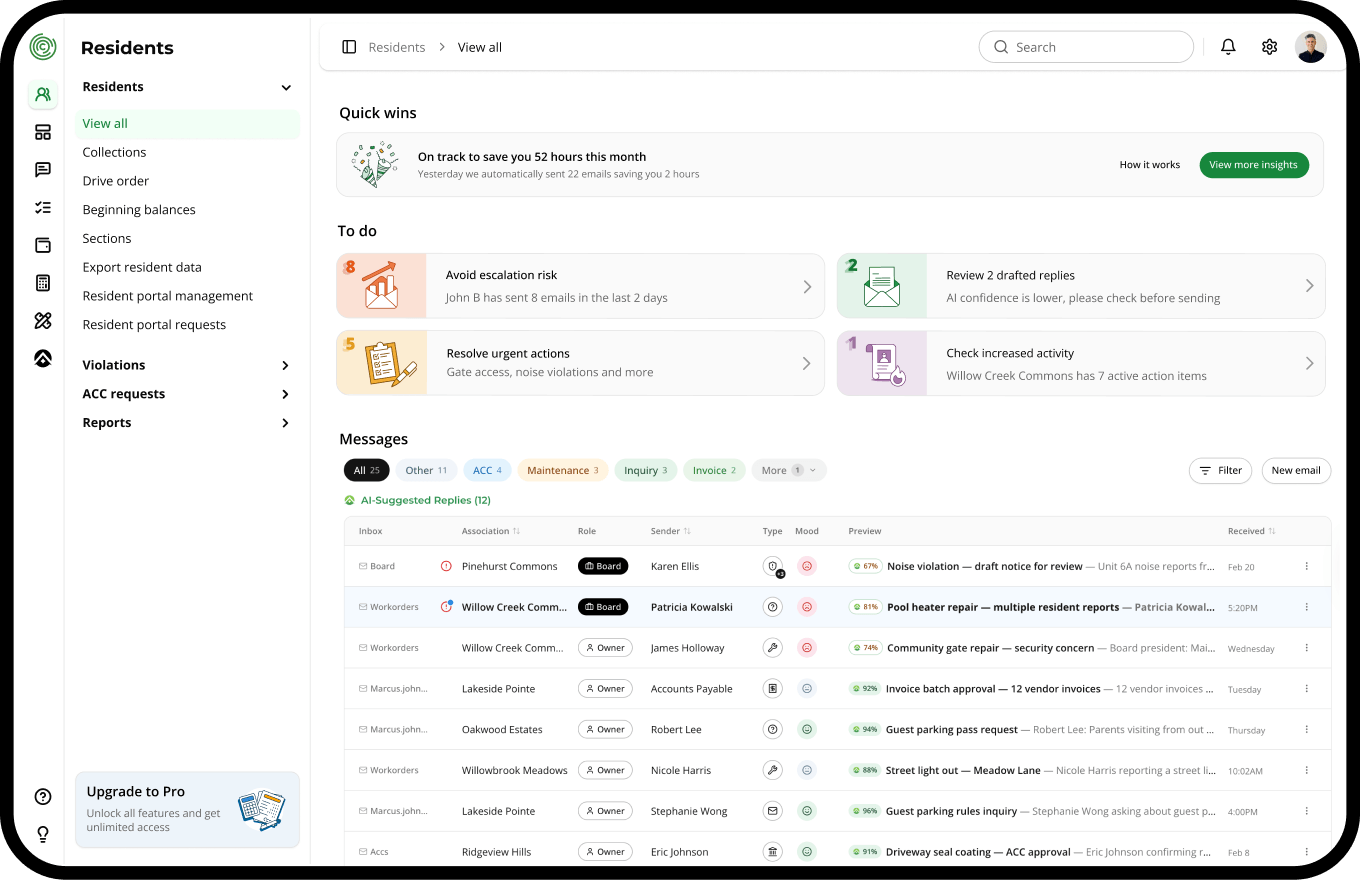
We designed a global navigation that replaced separate menus with one consistent structure across CINC Accounting, Cephai, Personalization, and the Inbox UI. Top-level categories follow what customers do: Residents, Communications, Tasks, Payments, Accounting, Management, Settings. Access is permission-driven, so each role sees the journey that matches their work. URL support means users can finally bookmark pages in CINC Accounting, something the platform had never supported before.
02 · Information architecture

From 200+ links to a managed structure.

We rebuilt the information architecture from the customer's mental model down. 200+ pages of menus were reorganised under top-level categories that follow customer work rather than internal product architecture. Complex internal naming was replaced with the language customers actually use. Cephai found a place inside that structure as a natural extension of the work, not a separate AI tool. The result is not only a navigation. It is a customer orientation system that turns 200+ choices into a few well-named ones.

03 · A platform around legacy

The hardest part: designing around legacy.

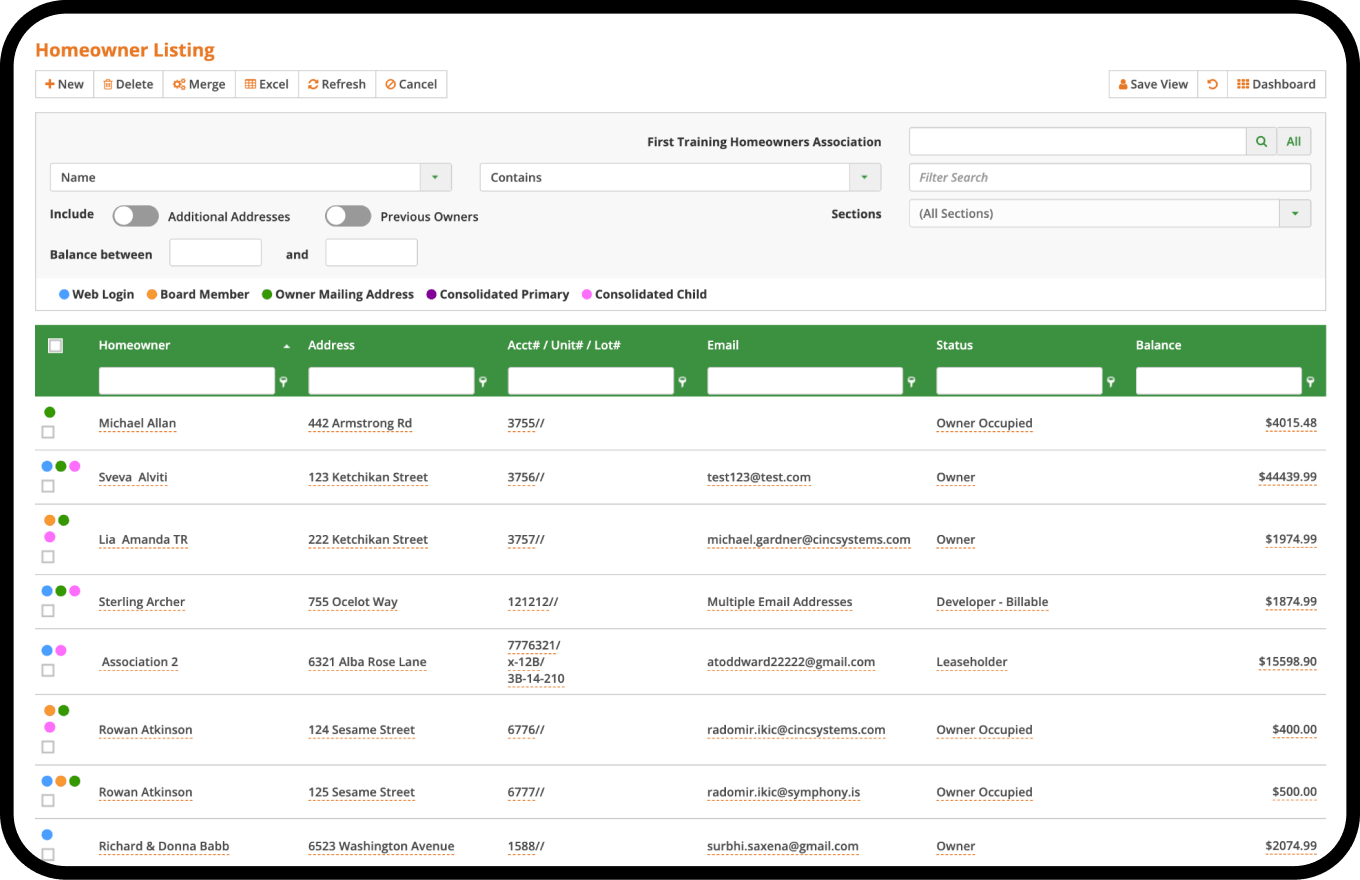
CINC Accounting was the platform's largest module and its most architecturally separate. Replacing it was not the brief. Unifying the customer experience around it was. We designed the navigation and information architecture to absorb legacy systems into one platform language, so customers stopped feeling the seams between modern and legacy modules. The platform reads as one product even where the underlying systems remain separate.

Lorem ipsum dolor sit amet, consectetur adipiscing elit, sed do eiusmod tempor incididunt ut labore et dolore magna.

Duri Chitayat · CTO, CINC Systems
Two views, one system

What changed for customers, what changed for CINC.

For customers

More work done. Less time spent.

  • More done in less time.
  • New users productive on day one, without a phone call.
  • Patterns learned once. Used everywhere.
  • The swivel chair is gone.
For the company

Growth without scaling the cost of growth.

  • Training cost stops scaling with the customer base.
  • One design language across every product surface.
  • New product areas inherit the foundation.
  • The foundation underneath the AI-native workflow.