From 6-week release cycles to same-day delivery.

CINC Systems moved from a six-week release cycle to shipping in a day by building a new design language, an AI-native design system, and a custom workflow on one shared toolchain, then codifying how the team works around it.

  • Client CINC Systems
  • Duration 16 weeks
  • Credits Duri Chitayat, Ashley Berenson, AI leads at CINC
The bottleneck

AI-native products need AI-native workflows.

CINC Systems is a community association management platform serving managers, accounting teams, board members, customer service teams, administrators, and residents across the US.

CINC was going for dominant leadership in its category. The bet was that AI would reshape what community management software is supposed to do, and that the company who built around it first would set the bar.

But AI features sitting on top of a six-week release cycle do not deliver AI-native experiences. To win, CINC needed an AI-native product and an AI-native way of building it. That meant a new design language, a design system that could carry AI experiences, an information architecture that consolidated multiple products into one platform, and an operating model that could ship all of it fast.

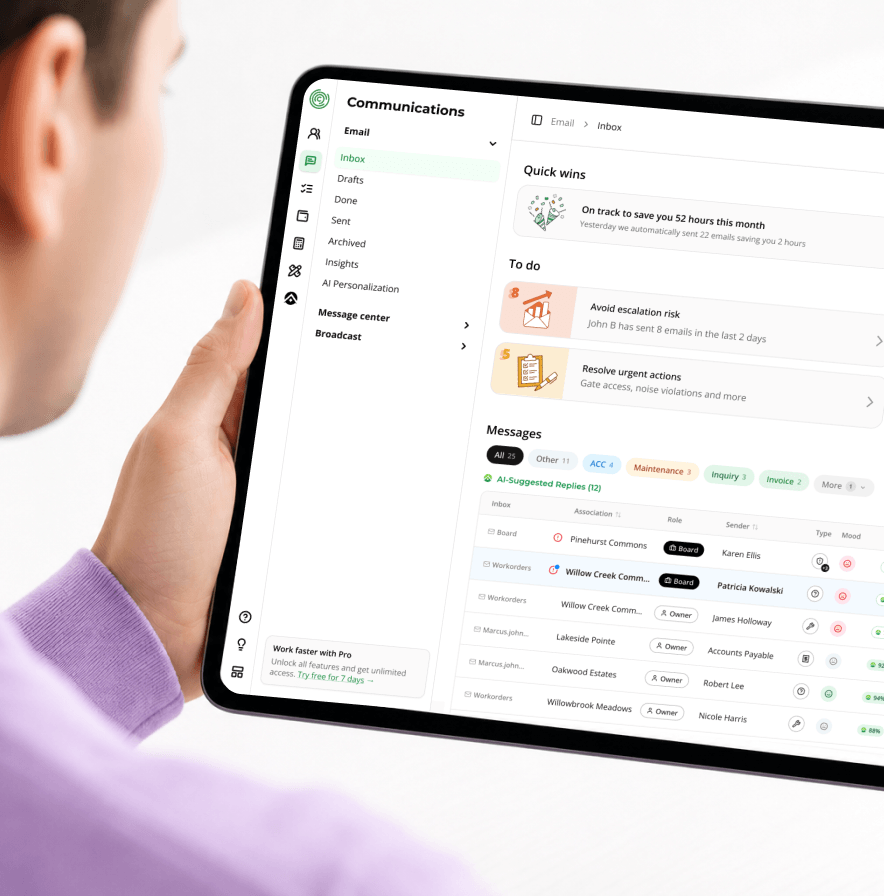
CINC product on a tablet, held by a customer
The shift

Every translation step is a tax.

For most software companies, design and engineering live in different tools, in different file formats, with different vocabularies. The hand-offs between them are real work: translation, interpretation, debate, rework.

Time is lost. Fidelity is lost. Decisions made carefully in one tool are reinterpreted in another. The longer the chain, the more the original intent erodes.

CINC was not unusual. Designers built screens. Engineers built features. Product managers wrote requirements. The system worked, but it had a ceiling. Speed was bounded by translation. Quality was bounded by how well each role could understand the other's artifacts.

Traditional process

Each step runs as its own loop, not as a line, with big delays and context lost in translation between them. Every role has its own definition of done, and the work circles back every time those definitions disagree.

  1. Brief
  2. Design
  3. Feedback
  4. Code
  5. QA
  6. Ship

When CINC started planning a more unified product with AI woven through it, that ceiling became the problem. You can't deliver an AI-native product experience on a non-AI-native development workflow. So CINC set out to change the workflow itself.

The work

What we did.

Mellow Studio worked alongside CINC's design, product, engineering, platform, and AI leadership to rebuild how the team ships software. The work was scoped as an operating-model change, adopted by the existing team rather than handed over.

The goal was a single toolchain that designers, engineers, product managers, and AI agents could all work against, producing artifacts any contributor could read, review, and change.

01 · Design system

An AI-native design system, readable and writeable by agents.

We built the design system on top of that language with one constraint that shaped every decision. Every artifact has to be readable and writeable by an AI agent as easily as by a person. Tokens, components, and patterns are text-first, versioned, and live in the same repository engineers commit to. The system was designed to invite agents in, not bolt them on.
02 · Consolidation & IA

Multiple products, one platform experience.

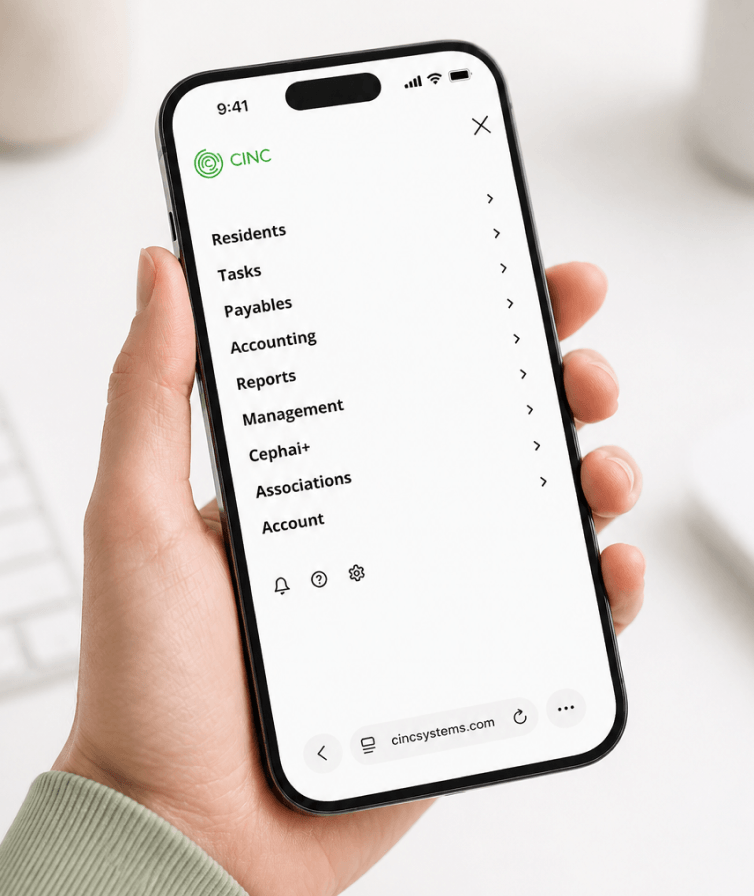
We consolidated multiple products into one platform experience and rebuilt the information architecture around customer work rather than product boundaries. Residents, Communications, Tasks, Payments, Accounting, Management, Settings. Role-aware navigation. Permission-driven access. This work is covered in detail in the companion case study.

03 · Toolchain

One toolchain, with a custom workflow on top.

A single toolchain that designers, engineers, product managers, and AI agents all work against. The same tokens that define a colour in a design tool ship to production. The same component a designer assembles in a prototype is the component an engineer ships to a customer.

The custom workflow defines how changes move from idea to production, how reviews happen, how AI agents propose changes, and how quality gates fire. It is the operating model in code.

Design Taste
Components
Rules
Agentic engineering
Design System
DesignOps.md
Product Knowledge Base
Create a new prototype
Production-grade mode
Codebase
AI agent rules
Brand guidelines
Tone of voice
Examples
Design Taste
Components
Rules
Agentic engineering
Design System
DesignOps.md
Product Knowledge Base
Create a new prototype
Production-grade mode
Codebase
AI agent rules
Brand guidelines
Tone of voice
Examples
What it enables

Three changes in how the team builds.

  1. 01

    AI generates production-grade code by default.

    When AI agents read the same components, tokens, and patterns engineers use, the code they generate is production-grade by default. No separate "AI prototype" layer to be rewritten before shipping. An agent can scaffold a new screen, hook it up to real data, and apply the right design patterns. The result is a real branch in the real repo, ready for review.

  2. 02

    Engineers don't translate. They assemble.

    When patterns are first-class, versioned artifacts, engineering work moves from "interpret a design and recreate it" to "assemble approved patterns into a flow." Engineers spend more time on the genuinely hard parts of a feature: data, performance, edge cases. They spend less on parts that should be solved once for the whole platform.

  3. 03

    Everybody refers to the same artifact.

    Three reviews, three artifacts, three windows for misalignment, replaced by one. The artifact is a branch in the repo. Each role sees what they need to see, but everyone is looking at the same source of truth at the same point in time.

Two views, one change

What changed for customers, what changed for the team.

For customers

The product gets better, faster.

  • Improvements show up in days instead of quarters.
  • The platform pulls multiple products into one.
  • AI helps with the work rather than sitting alongside it.
  • When something is broken or unclear, it gets fixed almost immediately.
For the team

A new way to ship software.

  • One place for design, product, engineering, and AI agents to work.
  • Decisions made once. Applied everywhere.
  • New hires come up to speed against a written system, not tribal knowledge.
  • The team owns the operating model and keeps it after we leave.

These are the same view. The customer outcome is a consequence of the team operating model. You cannot deliver one without the other.